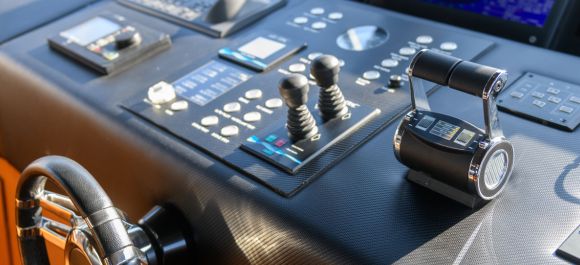
 Modern boats rely on precise input from the operator to perform efficiently and safely. Traditional cable systems often introduce lag, stiffness, and inconsistent feedback that can affect handling. Updated control systems address these limitations with digital communication and refined mechanical design. The result is smoother acceleration, more predictable shifting, and improved situational awareness at the helm. These changes are especially important for boaters who value reliability and controlled performance in varying water conditions.
Responsive Throttle Performance
Accurate throttle response allows operators to make small adjustments without overcorrecting. Electronic systems translate lever movement into immediate engine output, reducing hesitation. This level of responsiveness is a core advantage of modern marine controls. Smooth power delivery also helps when docking, towing, or navigating crowded waterways. Reduced friction in the control mechanism means less physical effort for the operator. Over time, this consistency contributes to better fuel management and less wear on drivetrain components.
Integrated Safety Features
New control platforms often include built in safeguards that were not possible with older designs. Neutral start protection, gear position indicators, and automatic throttle synchronization are common examples. These features reduce the chance of operator error during critical maneuvers. Clear visual and tactile feedback helps confirm that commands have been executed correctly. Some systems also integrate with engine monitoring to trigger alerts if performance moves outside safe limits. This layered approach supports safer operation for both experienced and newer boaters.
Digital Control Precision
Digital signaling removes the variability that comes with mechanical cables. Each movement of the control lever produces a consistent and measurable response from the engine. This precision is another reason many owners are upgrading to modern marine controls. Fine tuning at low speeds becomes easier, which is important in tight marinas or when approaching a trailer. Multi engine boats benefit from synchronized output without constant manual adjustment. The overall experience is more stable and predictable in both calm and rough conditions.
Simplified Operator Experience
Ergonomic design plays a significant role in updated control systems. Handles move with less resistance and require shorter travel to achieve the desired output. This reduces fatigue during long periods at the helm. Intuitive layouts allow operators to focus more on navigation and less on managing equipment. Many systems also support single lever control for multiple engines, streamlining operation. The simplified interface makes training new operators more straightforward and efficient.
Compatibility and Upgrades
Modern control solutions are often designed to integrate with current engine technology and helm displays. This compatibility allows for gradual upgrades rather than full system replacement. Digital networks can connect throttle, shift, steering, and monitoring functions into a unified platform. As a result, maintenance becomes more diagnostic driven and less dependent on manual adjustment. Boat owners who invest in modern marine controls often see long term value through improved reliability. The upgrade path also helps keep vessels aligned with current performance standards.
Practical Performance Benefits
Improved control systems provide measurable gains in handling and safety. Operators can respond more quickly to changing conditions without excessive force or delay. Predictable throttle behavior supports better decision making in confined spaces and at higher speeds. The integration of monitoring and control functions reduces uncertainty at the helm. For many boaters, these practical benefits justify the transition to updated technology.